Social media plays a huge part in how people get news and stay entertained today, especially when it comes to sports. One company that stands out is ESPN; it is a major sports media network that was founded in 1979 and is known for covering live games, highlights, and sports news. Over the years, ESPN has grown to become one of the most popular sports platforms in the world. Social media has become a big part of how it reaches its audience. Today, millions of people use platforms like Instagram, TikTok, and YouTube to stay updated. It makes social media one of the fastest ways to share information. About 53% of U.S. adults say they get news from social media. According to the Pew Research Center, “many Americans use social media to engage with news content, share information, and entertain themselves.” Because of this, companies like ESPN rely on social media to connect with fans, share updates, and stats in real time.
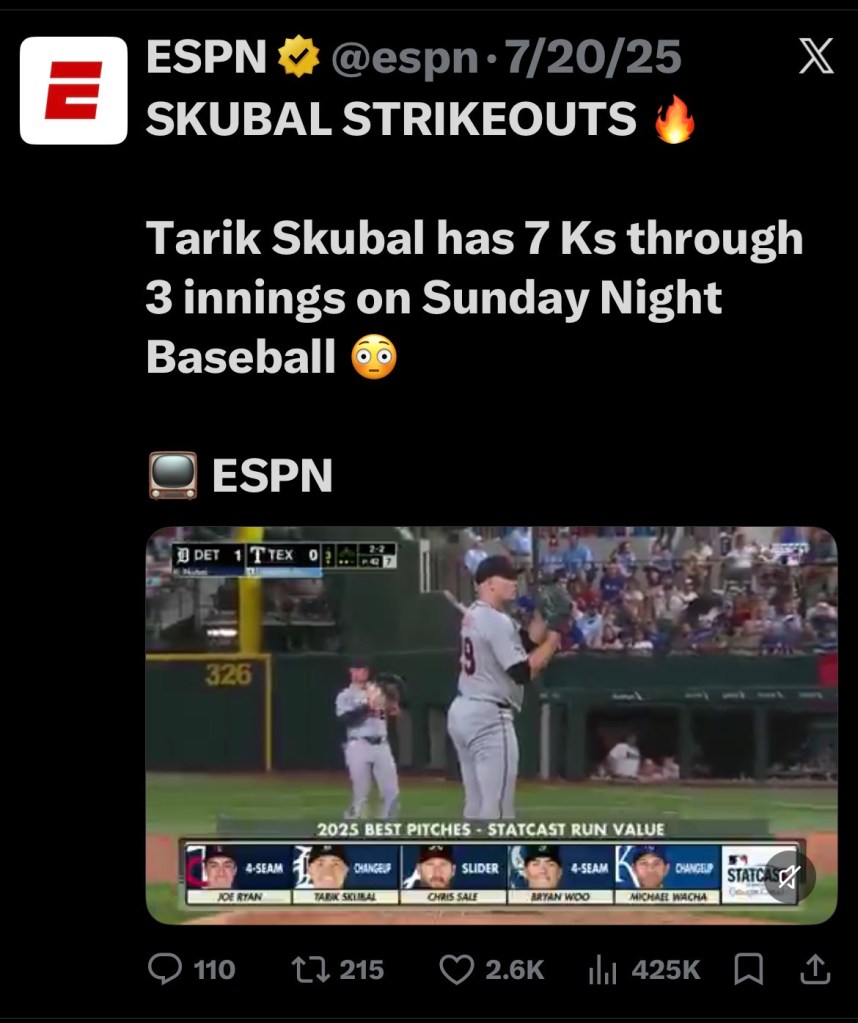
ESPN’s social media is also effective because of how much engagement it receives from users. Their posts often get thousands to millions of likes, comments, and shares, showing that fans are actively interacting with content daily. One of their most effective platforms is Instagram because it combines visuals, short videos, and quick updates, which makes it easy for users to stay interested. On X, ESPN focuses more on live updates and reactions, keeping fans involved during games in real time. Even though ESPN does not always reply directly to comments, the content still creates a lot of conversations among fans, especially when it comes to big plays or controversial moments.
This also connects to what we learned in the module about what makes social media unique. As the course explains, “choice, conversation, curation, creation, and collaboration.” ESPN uses choice by posting different types of content across multiple platforms. It lets users pick what they want to see. They create conversation by sharing posts that get fans talking and debating. Their curation is strong because they choose the most important highlights and news to share with their audience. ESPN focuses on creation by producing original videos, graphics, and sports coverage. Lastly, collaboration happens when they feature athletes, teams, and other media accounts in their content.
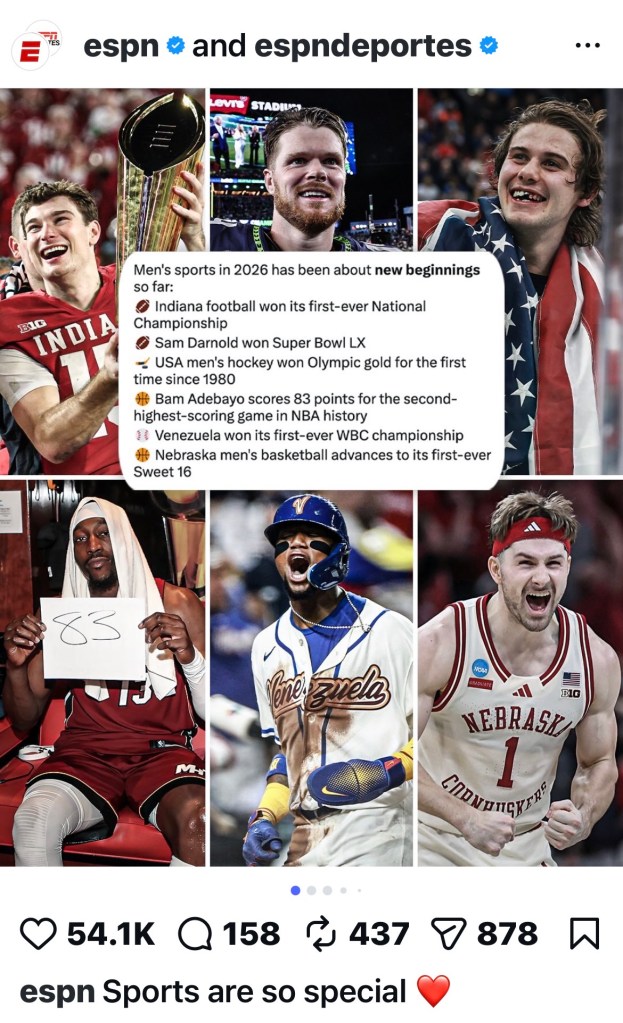
While ESPN is very effective on social media, there are also some negative effects that come with these platforms. As one source explains, “studies have shown that social media is correlated to increased feelings of depression among its users” (Social Media Victims Law Center). Research shows that lots of social media use is linked to the increase of anxiety, depression, and low self-esteem, mostly among young users (Anne E. Casey Foundation). There are also privacy concerns, as studies have found that location data from smartphones can track people’s movements, even when users think their information is private (The New York Times). Social media algorithms also play a huge role in what users see. In a discussion on MSNBC, a journalist named Ali Velshi explains that many people feel like they no longer have control of their attention because platforms are designed to keep users engaged for as long as possible. This can lead to constant scrolling and short attention spans. Research from MIT says that social media often promotes content that gets the most reactions even if it spreads misinformation. While ESPN benefits from social media by reaching a big audience, it is also part of a system that has both positive and negative impacts on users.
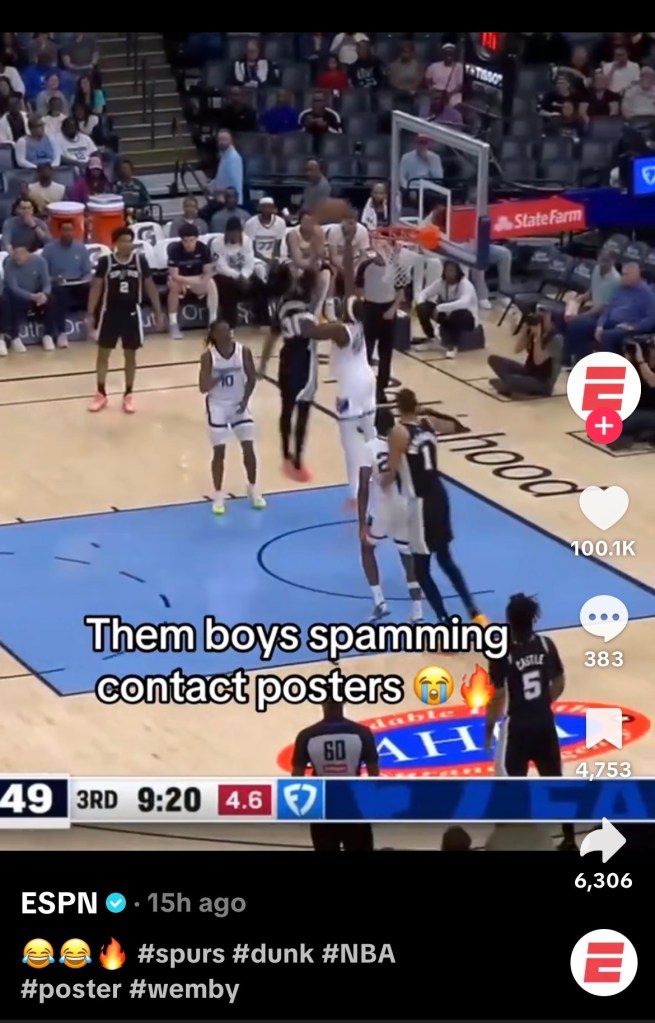
Overall, ESPN is very effective in its use of social media. When it comes to reaching large audiences and keeping fans engaged, one of its biggest strengths is its ability to post quickly and consistently during live sporting events that keep users up to date. Another strength is its presence across multiple platforms like Instagram, X, and TikTok. This allows ESPN to connect with different types of audiences. However, a weakness is that ESPN does not interact with followers directly, which might make the content feel less personal. ESPN could improve by creating more interactive content like polls, live streams, or responding to fans more often. A threat the company faces is the increasing competition from other sports media platforms and individual athletes who post their own content. Additionally, issues like misinformation, privacy concerns, and the effects of mental health may impact how users engage with these platforms. One recommendation for ESPN would be to increase social engagement by replying to comments and encouraging more interaction with fans. Another recommendation would be to continue expanding platforms like TikTok to reach younger sports fans. Overall, while ESPN is already very successful on social media, making these changes could help it stay competitive and build strong connections with users.
 Site Title